
Sulcata Tortoise Care Guide: Size, Diet, Enclosure, Lifespan & Everything I’ve Learned After Years of Breeding Them (2026)
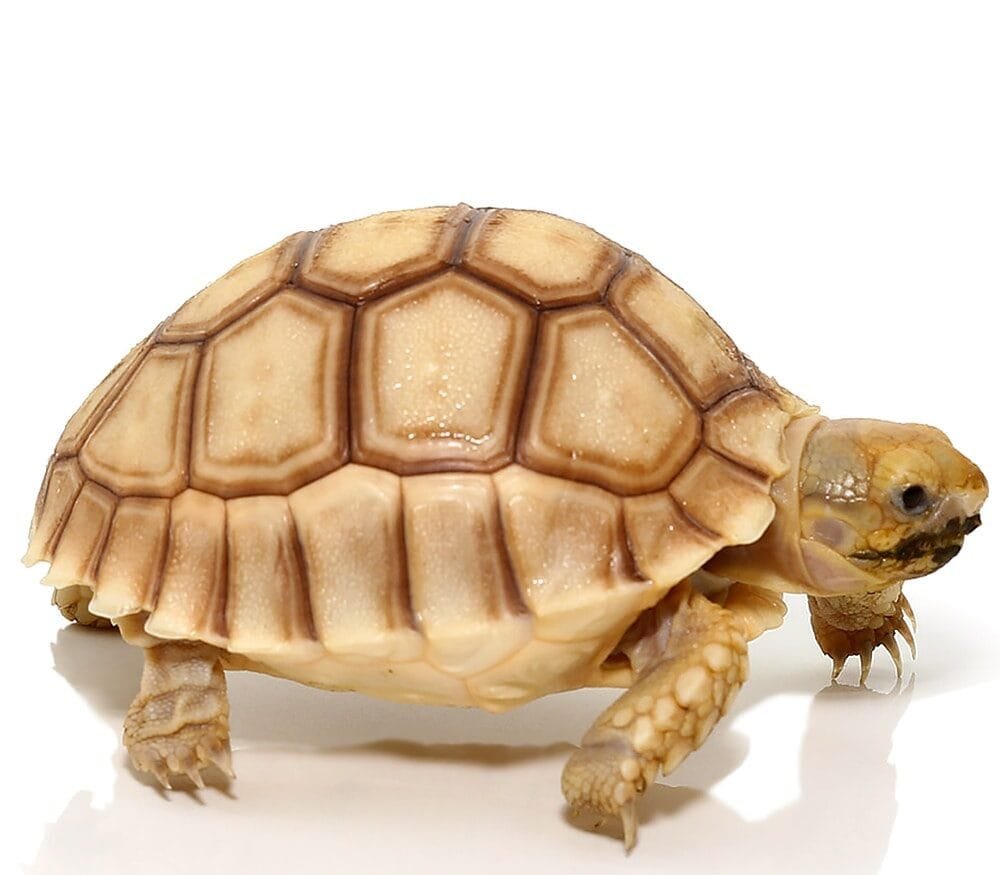
I still remember the first clutch of sulcata tortoise hatchlings I ever produced. I was sitting on the floor of my reptile room at two in the morning, watching a tiny sand-colored baby no bigger than a golf ball push its way out of the egg. I was absolutely smitten. That little nugget fit in the palm of my hand, weighed less than an empty coffee mug, and made the tiniest squeak I’d ever heard. I remember thinking, How could anyone not want one of these? Fast-forward a handful of years, and that same tortoise—who I kept back as a holdback—had turned into an 80-pound bulldozer that could flip a wheelbarrow, dig a burrow deep enough to hide a Labrador, and stare me down with the quiet confidence of a creature that knows it can outlive me.
I’ve been raising and breeding sulcata tortoises long enough now to have made just about every mistake you can make. I’ve power-fed youngsters and watched their shells pyramid into lumpy messes I was ashamed of. I’ve had a 120-pound male punch a hole through a wooden fence like it was cardboard. I’ve taken in rescue sulcatas from tearful owners who did everything the pet store told them and still ended up with a deformed, sick animal they couldn’t house. I’ve also raised smooth, healthy giants that will likely outlive my grandchildren, and there is nothing else in the world quite like walking out into your yard on a summer morning and seeing a herd of living dinosaurs grazing peacefully.
This guide is the page I wish had existed when I started. It’s everything I’ve learned through blood, sweat, and very expensive electric bills. I’m going to be brutally honest with you, because the last thing the world needs is another unwanted sulcata tortoise. If you’re thinking about getting one, I want you to know exactly what you’re signing up for—not just the cute hatchling, but the 150-pound, burrowing, decades-long commitment that comes after.
Quick Facts / Snapshot
Before we go any deeper, here’s a bare-bones look at what we’re dealing with.
| Category | Detail |
|---|---|
| Scientific name | Centrochelys sulcata |
| Common name | Sulcata tortoise, African spurred tortoise |
| Adult size | 24–30+ inches shell length; males generally larger |
| Adult weight | 70–150+ pounds; exceptional males can exceed 200 lbs |
| Lifespan | 70–100+ years with proper care |
| Diet | High-fiber, grass-based; strictly herbivorous |
| Minimum adult enclosure | Outdoor space of at least 600–800 sq ft for one adult; never a glass tank |
| Basking temperature | 95–105°F (hatchlings), 95–100°F (adults) |
| Night temperature | No lower than 70°F for hatchlings; adults need heated retreat below 60°F |
| Humidity (hatchlings) | 80%+ in a closed chamber to prevent pyramiding |
| Difficulty level | Intermediate to advanced (due to size, strength, lifespan, and space needs) |
If that table made your eyes go wide, good. It should. A sulcata tortoise is not a starter reptile. It’s not a tank pet. It’s a multi-decade relationship with an animal that can literally remodel your backyard without your permission.
What Is a Sulcata Tortoise?
The sulcata tortoise is the third-largest tortoise species on the planet, right behind the Galapagos and Aldabra giants. In the wild, they’re found along the southern edge of the Sahara Desert in Africa, across a band of arid savanna and scrubland. I’ve spent hours just watching mine graze, and you can still see every bit of that wild heritage in the way they move, eat, and dig.
In my experience, these tortoises are built for extremes. They handle blazing heat that would cook most animals, but they do it by engineering their own environment. A wild sulcata spends the hottest part of the day deep inside a burrow it excavated—sometimes 10 feet long or more. I’ve replicated that on a smaller scale in my pens, and I’ve measured temperatures inside those burrows that are easily 20 degrees cooler than the surface. That’s not optional for them; it’s survival. A sulcata without a proper retreat will overheat, stress out, and get sick.
What’s easy to miss when you see a baby in a pet store is that these animals are walking tanks. Their skin is thick and tough, their legs are solid columns of muscle, and their shell—especially in a full-grown male—is armor-grade. I’ve watched a 100-pound male square up to a plastic garbage can and shove it across the yard just because it was in his way. They aren’t aggressive by nature, but they are unbelievably strong and stubborn. That’s not a flaw; it’s just who they are.
One thing I always tell new owners: a sulcata tortoise doesn’t think like a dog or even like a bearded dragon. It’s a grazing machine with a deeply ingrained set of behaviors. It walks miles in search of food in the wild. It digs. It basks. It mates with zero subtlety. If you try to box that into a 40-gallon tank, you’re going to lose every single time.
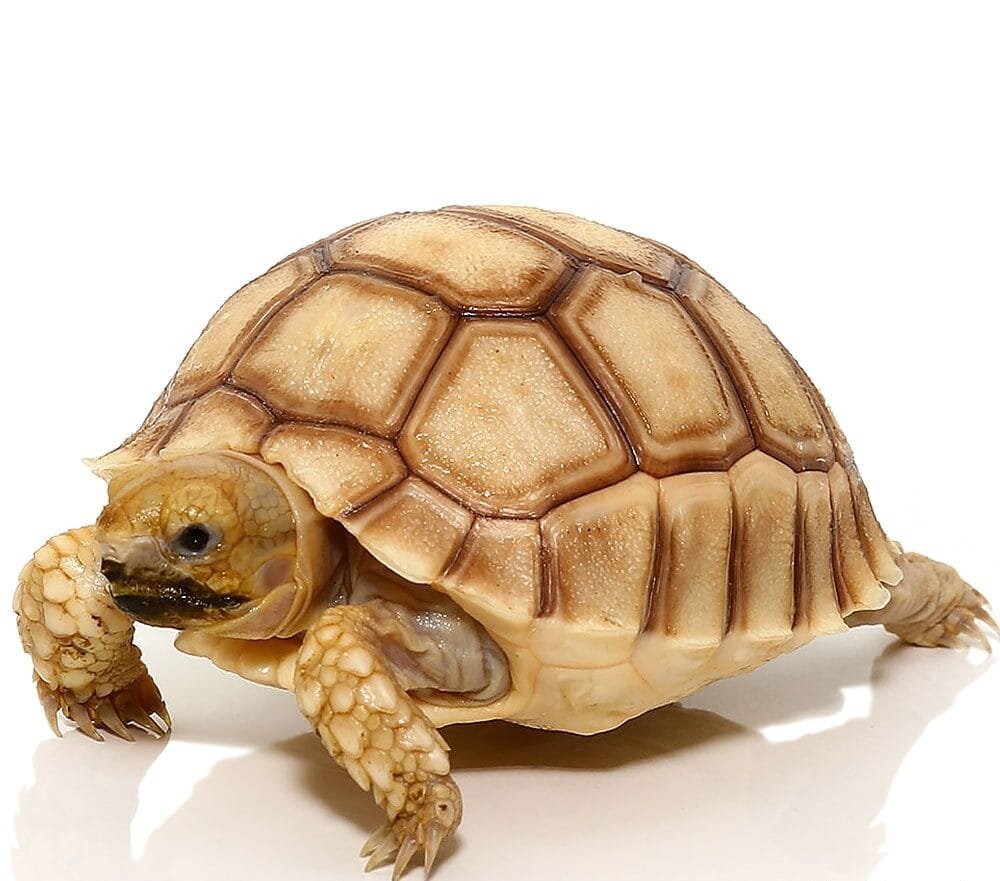
Baby Hypo Sulcata Tortoise For Sale
WE HAVE Baby Hypo Sulcata Tortoise FOR SALE. HERE ARE SOME HIGHLIGHTS:
- Centrochelys sulcata
- Farm Bred
- Around 3 Inches In Shell Length
- Adults Can Reach Up To 36 Inches In Shell Length
- Feasting On Vitamin Dusted Fresh Greens, Hays, And Tortoise Diet
FUN FACTS!!
- Tortoises Are Very Personable And Make Great Pets
- Hypo Is A Morph That Makes This Tortoise Much Lighter And Brighter In Color
- Originating From The Sub-Saharan Regions Of Africa
- With Proper Care And A Well Maintained Diet These Can Live Up To 100 Years At A Time
- These Tortoises Come From The Dry Grasslands Of Africa Thriving Best In Those Conditions
- They Are Also Known As “Spur Thighs” Which Comes From The Elongated Scales On Their Front Legs That They Use To Dig And Push Dirt Out Of Their Burrows
How Big Do Sulcata Tortoises Get?
This is the question I get asked more than any other, and it’s the one people lie to themselves about the most. How big do they really get? They get huge. Not “big for a pet.” Big enough to need their own shed.
I’ve kept detailed growth records on every sulcata tortoise I’ve hatched and raised over the years. What I’m sharing below is based on animals that were grown slowly on a proper grass-hay diet with plenty of outdoor time—not power-fed on protein-heavy pellets. If you overfeed them, they’ll hit big numbers faster, but their shell will look like a pinecone. I’ll cover pyramiding later.
Typical Sulcata Tortoise Growth Chart (Well-Raised Animals)
| Age | Shell Length (inches) | Weight |
|---|---|---|
| Hatchling (0–3 months) | 2.0–2.5 in | 25–40 g |
| 6 months | 3.0–4.0 in | 80–150 g |
| 1 year | 5.0–7.0 in | 500–900 g (1–2 lbs) |
| 2 years | 8.0–11.0 in | 3–6 lbs |
| 3 years | 11.0–14.0 in | 8–14 lbs |
| 5 years | 15.0–20.0 in | 25–45 lbs |
| 8–10 years | 20.0–26.0 in | 60–100 lbs |
| 12–15 years | 24.0–28.0 in | 100–140 lbs |
| 20+ years | 26.0–30.0+ in | 120–180+ lbs |
Keep in mind, males typically outgrow females in both length and bulk. I’ve had a 17-year-old male tip the scale at 155 pounds with a shell length just shy of 30 inches, and he’s still growing—just more slowly now. Females usually level off a bit smaller, around 70–100 pounds, but I’ve seen some big girls hit 120. There’s no “teacup” version. There’s no dwarf gene. If someone tries to sell you a sulcata that will “stay small,” they’re either lying or ignorant, and neither is acceptable.
I’ve seen too many people buy a hatchling in March and surrender a 30-pound tortoise by September of the next year because “nobody told us it would get this big.” Don’t be that person. I am telling you right now: it will get this big.
Lifespan & The Reality of Ownership
A sulcata tortoise can live 70 to 100 years, and there are credible reports of some pushing well past that. Think about that number. If you’re 30 years old and you buy a hatchling today, that tortoise could easily be alive when your grandchildren are middle-aged. I’ve had to put this in my own will. That’s not me being dramatic; that’s responsible ownership.
I’ve personally taken in more rescue sulcatas than I can count on two hands. Most were under five years old. The story is always some version of the same thing: someone bought a cute baby, kept it in a dry aquarium with a heat lamp, fed it grocery store lettuce, and by year three they had a lumpy, sluggish 20-pound tortoise that was outgrowing everything. A few of those animals didn’t make it despite everything I tried. Others are still with me, and every time I look at them I’m reminded how badly we fail this species in captivity when we don’t treat them like the long-haul commitment they are.
The hard reality is this: this is not a pet you rehome easily. Most rescues are overflowing. Sanctuaries are at capacity. The cute hatchling market floods every spring, and the adults nobody wants pile up in backyards across the country. If you can’t commit to 70+ years of care—including building a heated winter shelter if you live anywhere with cold nights—do not get a sulcata tortoise. I’m not trying to gatekeep. I’m trying to save you, and the tortoise, from heartbreak.
Is a Sulcata Tortoise Right for You?
After raising dozens of these animals and talking to hundreds of potential owners, I’ve developed a pretty blunt filter. Here’s the honest breeder’s view.
The Pros (Why I Love Them)
- Incredible personalities. Sulcatas are curious, bold, and surprisingly interactive. They recognize me, come when I call (okay, when I bring food), and have distinct quirks. One of my females insists on rearranging her water dish every single morning.
- They’re grazing lawnmowers. If you have the space, a sulcata tortoise will keep your grass trimmed for free. Mine maintain a section of pasture that would otherwise require a tractor.
- Hardy in the right setup. Once you’ve nailed the environment, these animals are resilient. They don’t need constant coddling like some other reptiles.
- Living history. There’s something profound about sharing your life with an animal that was here before you and will be here after you. I never get tired of watching them.
The Cons (The Stuff Nobody Wants to Hear)
- Size and strength. We’ve covered this. They can break fences, flip heavy objects, and dig burrows that undermine foundations. I’ve had to re-pour a sidewalk section because a male decided it was a great place to tunnel.
- Lifespan. 70+ years is a lot of living. You need a succession plan. This is not a pet you “try out.”
- They dig. Relentlessly. This is non-negotiable. You can’t train it out of them. You can only manage it with buried barriers, deep foundations, and careful pen design.
- Heating costs can be shocking. If you live where it gets cold, you’ll be running heaters for months. I’ve had winter electric bills spike by $200–300 a month just for the tortoise shed.
- Vet care is expensive and specialized. You need an exotics vet who knows giant tortoises. Routine stuff like a beak trim or a shell scrape can run hundreds of dollars. An emergency surgery? Thousands.
- They aren’t cuddly. If you want a pet that will sit in your lap, get a cat. A 100-pound sulcata doesn’t do laps.
Who Should NOT Get a Sulcata Tortoise
I say this with love, but please do not get a sulcata tortoise if:
- You live in an apartment, condo, or a house with a postage-stamp yard.
- You rent and can’t guarantee a permanent large outdoor space.
- You live in a climate with long, cold winters and you’re not prepared to build a fully insulated, heated indoor-outdoor shelter.
- You have young children who you expect will “play with” the tortoise. A small child can be knocked over, and a curious tortoise bite packs a punch.
- You’re looking for a low-cost, low-effort pet.
- You think you’ll “rehome it if it gets too big.” There may be no home waiting.
I’ve turned away plenty of people who had cash in hand. I’ve never regretted it. I have regretted every single hatchling I sold to someone I had a bad feeling about.
Enclosure & Housing Requirements
The single biggest mistake I see—and one I made myself early on—is treating a sulcata tortoise like an indoor terrarium pet. It’s not. A hatchling can start in a carefully controlled indoor chamber, but everything you do from day one should be aimed at getting that tortoise outdoors into a secure, spacious pen.
Hatchling and Juvenile Enclosure (0–2 Years)
For the first couple of years, I raise babies indoors in what’s essentially a closed-chamber greenhouse setup. I learned this after fighting pyramiding with open-topped enclosures and dry substrate. The key is high humidity, steady warmth, and no drafts.
My hatchling setup looks like this:
- Enclosure type: A large plastic grow tent, a custom-built PVC box, or a heavily modified stock tank with a sealed lid. The goal is to trap humidity.
- Substrate: A deep layer (4–6 inches) of organic topsoil mixed with coconut coir and a bit of fine-grade cypress mulch. I keep the bottom layers damp but the surface dry. This creates a humidity gradient.
- Lighting and heating: A 100-watt flood basking bulb on one end, with a surface temperature of 95–105°F. A linear T5 UVB tube (Arcadia 12% or Zoo Med ReptiSun 10.0) spanning most of the enclosure. I don’t rely on coil UVB bulbs; they’re nearly useless.
- Ambient temperatures: Warm side 85–90°F, cool side 78–82°F.
- Night heat: A ceramic heat emitter on a thermostat, keeping the enclosure no lower than 72°F at night. I never let it dip below 70°F for babies.
- Humidity: I maintain 80%+ relative humidity measured at tortoise level. This isn’t a “mist occasionally” situation—I use a high-quality humidifier piped into the enclosure if needed, and I seal the top well.
- Hides: At least two humid hides. I use cork bark flats partially buried, with sphagnum moss inside that I mist daily.
- Water: A shallow, heavy terracotta plant saucer big enough for the tortoise to soak in. I clean and refill it every morning.
I soak hatchlings in shallow lukewarm water for 20–30 minutes every single day, like clockwork. This is huge for hydration and smooth shell growth. I’ve seen babies that were soaked religiously turn out flawless, and ones that got sporadic soaks start showing early pyramiding within months.
One thing I always tell new owners: don’t put a baby sulcata in an open glass tank with a screen top. You’ll end up with a dry, dusty box where humidity hovers around 20%, and your tortoise will pyramid no matter what else you do. I’ve been there. It’s heartbreaking and preventable.
Adult Outdoor Enclosure (2 Years and Up)
Once a sulcata hits about 6–8 inches, I begin moving them outdoors during the day in a predator-proof pen, weather permitting. By the time they’re around 2–3 years old and 10–14 inches, they should be living outside full-time with a heated shelter available for cool nights.
Space requirements: I start juveniles with an outdoor pen of at least 10×10 feet, and I expand as they grow. For one adult sulcata, I’d consider 600–800 square feet the bare minimum. More is always better. I’ve got a breeding group on a half-acre, and they use every inch of it.
Fencing: This is where I see catastrophic failures. An adult sulcata tortoise can bulldoze right through flimsy wire fencing. I use sturdy wood or concrete block walls at least 18–24 inches tall. If I have to use wire, it’s heavy-gauge welded wire (2×4 mesh) securely mounted to posts sunk in concrete. The tortoise must not be able to see through the bottom foot of the fence; if they can see beyond, they’ll ram it endlessly. I add a visual barrier—corrugated metal or solid wood—along the lower portion.
Underground barrier: Sulcatas dig. They dig deep. I’ve measured burrows in my pens that go 6 feet long and 3 feet deep before the tortoise decided it was fine. To prevent escape, I bury hardware cloth or concrete pavers at least 18–24 inches deep along the perimeter, and I extend the barrier in an L-shape (apron) outward about 12 inches. This stops them from digging right at the fence line. If you skip this step, I promise you will one day find a tortoise in your neighbor’s garden.
Shelter (night box / heated shed): This is non-negotiable. I live in a region where winter nights regularly dip into the 30s and 40s. My adult sulcatas have a 6×4 foot insulated wooden shed with a sloped roof and an oil-filled radiator heater set to keep the interior at 70–75°F. For milder climates, a well-insulated dog house with a Kane heat mat or a ceramic heater might work, but you must have a thermostat. I’ve seen frost damage on tortoises whose heat source failed on a cold night. It’s horrific and entirely preventable.
Inside the shelter, I use a deep layer of hay or cypress mulch as bedding. I don’t let it get damp inside the heated box; wet + warmth + tortoise waste equals shell rot waiting to happen.
Temperature and Humidity Targets Table
| Parameter | Hatchlings (Closed Chamber) | Adults (Outdoor with Heated Shelter) |
|---|---|---|
| Basking surface temp | 95–105°F | 95–100°F (in sun or under lamp) |
| Warm side ambient | 85–90°F | Outdoor ambient (70–95°F ideal range) |
| Cool side ambient | 78–82°F | Must have shaded retreat in 80s |
| Night minimum | 72°F (never below 70°F) | Heated shelter at 70–75°F if outdoor drops below 60°F |
| Humidity | 80%+ (critical) | Natural ambient humidity; access to damp burrow/mud wallow is beneficial |
Diet & Nutrition
If there’s one thing a sulcata tortoise does all day, it’s eat. And if you feed them wrong, they will suffer in ways that are slow, painful, and almost impossible to reverse. I’ve taken in sulcatas that had been fed nothing but iceberg lettuce and fruit for years. Their shells were soft, their beaks overgrown, and their internal organs were likely a wreck. A sulcata’s digestive system is built for one thing: high-fiber, low-protein, calcium-rich grasses and hays.
What I Feed My Sulcata Tortoises
- Grass and hay (70–80% of diet): The backbone of everything. I grow a mix of Bermuda grass, timothy, orchard grass, and buffalo grass in their pasture. In winter, I feed high-quality grass hay—timothy, orchard, or Teff—lightly moistened. They don’t always love hay at first, so I chop it fine and mix it with fresh greens to transition them.
- Weeds and safe leafy greens: Dandelion greens, plantain weed, clover, hibiscus leaves and flowers, mulberry leaves, grape leaves, endive, escarole, radicchio, turnip greens, mustard greens, collard greens, cactus pads (prickly pear, spines removed). I avoid kale, spinach, and broccoli in large amounts because of oxalates and goitrogens.
- Commercial grassland tortoise pellets (Mazuri Tortoise Diet LS, soaked): I use this as a supplement, maybe 1–2 times a week, especially in winter. It’s a helpful backup, but I never let it dominate the diet.
- Calcium supplement: I dust food with a phosphorus-free calcium powder 2–3 times a week for growing youngsters. Adults on a good grass diet usually need less, but I always keep cuttlebone in the pen. I’ve seen females gnaw on cuttlebone heavily during egg-laying season.
- Water: Always available. Not a food, but I’m putting it here because I’ve met too many people who were told “they get water from their food.” No. Fresh, clean water in a heavy dish big enough to soak in. Always.
What I Never Feed
- Fruit. No fruit. Not as a treat, not in small amounts. Sulcatas don’t have the gut flora for high-sugar foods. I’ve seen fruit cause diarrhea, gut dysbiosis, and a nasty bloom of parasites. Just don’t.
- Animal protein (dog food, cat food, bugs, meat). Their systems can’t process it. It causes rapid growth, severe pyramiding, and kidney damage.
- Iceberg lettuce, romaine as staple. Too watery, almost zero nutrition. An occasional leaf won’t kill them, but if it’s a staple, you’re starving your tortoise slowly.
- Commercial “spring mix” heavy on spinach. A little is okay, but too much spinach blocks calcium absorption.
- Pellets designed for other species (like high-protein iguana or aquatic turtle pellets). This was a fad decades ago and it ruined countless shells.
I’ve found that the simplest way to check if you’re on track is to look at the tortoise’s urates—the white waste they pass. It should be soft and toothpaste-like, not hard and gritty. Gritty urates mean chronic dehydration and too much protein. I’ve corrected that many times by increasing soaks and switching to a grass-heavy diet.
Health, Common Problems & Vet Care
I’ve dealt with a lot of sick sulcatas over the years, both in my own collection and in rescues. Here’s what shows up most often, and what I’ve learned to do about it.
Pyramiding
This is the boulder on my shoulder. Pyramiding—the lumpy, raised scutes that make a shell look like a stepped pyramid—is almost entirely caused by chronic dehydration and low humidity during growth, often combined with overfeeding or high protein. I pyramided my first few clutches badly. I was raising them in dry conditions because “they’re desert animals,” and I was dead wrong. A sulcata hatchling spends its early life tucked into humid burrows, rain-soaked grass clumps, and mud wallows in the wild. They need humidity.
Once pyramiding sets in, you can’t undo the existing bumps. You can only stop it from getting worse by fixing the environment. A smooth-shelled sulcata is the gold standard, and it’s achievable if you commit to the closed-chamber, high-humidity, daily-soak protocol I described above. I’ve gone from hatching puffy, pyramided babies to consistently producing smooth animals, and the difference is entirely in moisture.
Respiratory Infections
Sulcatas are tough, but a cold, damp tortoise is a sick tortoise. Signs I watch for: bubbles from the nose, open-mouth breathing, lethargy, puffy eyes. If I see that, I immediately bump up the heat, reduce drafts, and call my exotics vet. Most early cases resolve with temperature correction and maybe a course of antibiotics. I’ve lost one juvenile to pneumonia, and I never want to go through that again. Keep them warm and dry on the shell, humid in the air for babies—sounds contradictory, but you want high ambient humidity with no wet, cold substrate against the plastron.
Shell Rot and Septicemia
Wet, soiled bedding in a warm night box is a recipe for shell rot. I inspect plastrons regularly. Shell rot looks like pitted, soft, or discolored areas, often with a bad smell. I treat it aggressively: clean the area with diluted betadine, apply an antifungal/antibacterial cream (prescribed by my vet), and fix the husbandry. I’ve also seen septicemia—a systemic infection that can present as pinkness on the plastron. It’s a life-threatening emergency, and you need a vet immediately.
Bladder Stones
Sulcata tortoises are prone to forming large bladder stones if they’re chronically dehydrated or fed an improper diet. I’ve had a rescue female that passed a stone the size of a golf ball after months of daily long soaks and a diet overhaul. It was painful to watch, and surgery would have cost thousands. Prevention is all about hydration: soaks, available water, moisture-rich foods, and high-fiber diet.
Beak and Nail Overgrowth
An overgrown beak can prevent a tortoise from eating. I’ve used a Dremel very carefully, but if you’re not 100% confident, have your vet do it. I keep beaks worn down naturally by feeding tough grasses and by putting cuttlebone and rough rock slabs in the pen for them to nibble and walk on.
Vet visits: I take my breeding adults in for annual wellness checks, bloodwork, and fecal exams. It’s not cheap. A thorough exam plus diagnostics can easily run $200–400. But catching problems early is far cheaper than emergency surgery.
Behavior, Temperament & Handling
Sulcatas have more personality than a lot of mammals I’ve met. They’re not warm and fuzzy, but they’re present. Mine know my voice. When I walk into the pen in the morning, they come trudging over like miniature tanks, and the big male will sometimes nudge my boots looking for food. I can hand-feed grape leaves and hibiscus flowers without getting bitten (usually), and I’ve seen them stretch their necks out for a gentle scratch.
That said, they’re not pushovers. A sulcata tortoise bullies objects. He rams things. I’ve seen males go after trash cans, lawn chairs, and once a red wheelbarrow they apparently had a vendetta against. During breeding season, the male’s “enthusiasm” is loud, aggressive, and startling if you’ve never heard a tortoise bellow like a cow. I’ve had neighbors ask what’s dying in my yard. Nope, just tortoise romance.
Handling: I don’t pick up my adult sulcatas unless I absolutely have to. It stresses them, and it’s dangerous for me. I use a heavy-duty garden cart if I need to move one. Even juveniles can flail and scratch you up. Always support the whole body. And never, ever flip a tortoise on its back and walk away. Their lungs are positioned near the top of the shell; being on their back can compress them and cause respiratory distress.
One behavior that surprises new keepers is ramming and head-butting. Males do this to establish dominance and during courtship. I’ve had a male ram a fence post so hard he split the wood. If you keep multiple males, you will have warfare. I keep my males separated unless they’re with females in a very large space during breeding season, and even then I watch carefully.
Full Cost Breakdown
I’m going to be upfront about money, because I’ve heard “they’re cheap to keep” way too many times. A sulcata tortoise is not expensive day to day once the setup is done, but the setup and long-term infrastructure are brutal if you do it right.
Initial Setup Costs (Hatchling Indoor Chamber)
| Item | Cost Range |
|---|---|
| Enclosure (grow tent or custom PVC) | $100–$300 |
| T5 UVB fixture and bulb | $60–$120 |
| Basking lamp, dome, ceramic heat emitter | $50–$100 |
| Thermostats and timers | $50–$100 |
| Substrate, hides, water dish | $50–$100 |
| Humidifier and humidity gauge | $50–$80 |
| Total (hatchling setup) | $360–$800 |
Adult Outdoor Infrastructure (One Tortoise)
| Item | Initial Cost |
|---|---|
| Fencing materials (wood, concrete blocks, welded wire, posts) | $500–$2,000+ |
| Underground digging barrier | $200–$500 |
| Insulated night box / heated shed | $400–$1,500 |
| Heater (oil-filled radiator, heat mat, thermostat) | $100–$300 |
| Water tub, rock slabs, shade structures | $50–$200 |
| Total adult setup | $1,250–$4,500+ |
Annual Costs (Ongoing)
| Expense | Annual Estimate |
|---|---|
| Electricity (heating, UVB, lights) | $300–$900 (heavily seasonal) |
| Food (hay, greens, pellets, supplements) | $400–$800 |
| Substrate replacement (indoor babies) | $100–$200 |
| Veterinary (wellness, fecal, emergencies) | $200–$800+ |
| Miscellaneous (bulbs, repairs) | $100–$300 |
| Total annual | $1,100–$3,000+ |
**I’ve had years where an emergency surgery blew the annual total past $2,500.** A 100-pound tortoise doesn’t get cheap vet visits. I always tell potential buyers: if a sudden $1,500 vet bill would wreck you, you’re not ready for a sulcata.
Conservation Status & Ethical Considerations
In the wild, sulcata tortoises are listed as Endangered by the IUCN. Habitat loss, poaching, and the pet trade have hammered wild populations. As a breeder, I think about this a lot. Captive breeding, done responsibly, can reduce pressure on wild animals. But flooding the pet market with cheap, poorly-bred babies that end up dead or dumped does more harm than good.
I only breed from healthy, smooth-shelled, unrelated adults. I never sell hatchlings without an extensive conversation about care, and I’m not shy about refusing a sale. I also support ethical rescues and sanctuaries—if you’re not ready for a lifetime with a sulcata, please consider donating to an organization that helps the ones who weren’t so lucky.
If you do buy a sulcata tortoise, buy from a breeder who can show you the parents, who asks you tough questions, and who doesn’t just want your credit card. Avoid online auctions, reptile expos impulse buys, and anyone who can’t tell you exactly how they raised their hatchlings. The choices you make at purchase ripple for decades.
Frequently Asked Questions
I’ve answered these questions a thousand times in my inbox and at shows. Here’s the real talk.
Q: What do sulcata tortoises eat?
A high-fiber, grass-based diet. Grasses, hays, weeds, and specific leafy greens. No fruit, no animal protein. Think of them as tiny horses with shells.
Q: How fast do sulcata tortoises grow?
Fast enough to catch you off guard. In the right conditions, a hatchling can reach 10–12 inches and 10+ pounds by age 2–3. In my experience, the folks who ask this question the most are the ones secretly hoping they’ll stay small. They won’t.
Q: Can a sulcata tortoise live indoors permanently?
Absolutely not. An adult sulcata tortoise needs outdoor space to graze, move, and maintain normal behaviors. I’ve never seen a healthy, well-adjusted adult kept exclusively indoors, and I’ve seen a lot of sick, depressed animals that tried.
Q: Do sulcata tortoises need a companion?
No. They’re solitary by nature. Males housed together will fight, and even females can be territorial. I’ve seen “pairs” that seemed fine until one day one tortoise rammed the other into a corner and caused serious injury. Keep one, or keep a group in a huge enclosure with plenty of retreats. Never two males alone.
Q: How deep do sulcata tortoises dig?
Deep. I’ve measured burrows in my yard that were 8–10 feet long and 4 feet deep. They can dig deep enough to collapse a fence line or undermine a shed foundation. You must have underground barriers.
Q: Are sulcata tortoises good pets for kids?
No, not as hands-on pets. A sulcata can knock a small child over, deliver a painful bite, and doesn’t enjoy being carried around. They’re wonderful to observe and interact with on the ground under supervision, but this is a family commitment, not a child’s pet.
Q: What’s the best substrate for a baby sulcata?
A mix of organic topsoil, coconut coir, and cypress mulch that holds moisture without being soggy. I avoid sand, alfalfa pellets, and pure paper towels—they don’t support the microclimate you need.
Q: Do I really need to soak a baby sulcata every day?
Yes. In my experience, daily soaks are one of the single biggest factors in producing a smooth, healthy tortoise. I won’t sell a hatchling to someone who balks at this. It’s that important.
Final Thoughts From Someone Who’s In It for Life
I could talk about sulcata tortoises until the sun burns out. They’ve taught me patience, humility, and the brutal math of long-term animal care. Every smooth-shelled adult I look at is the result of years of daily decisions—some I got right, some I had to learn from the hard way. The ones that didn’t make it? They still sit with me.
If you’ve read this far and you’re still sure a sulcata tortoise is for you, then I want you to do it right. Build the enclosure before you bring the baby home. Have your humidity chamber dialed in, your grass seed planted, your heated night box framed. Find an exotics vet before you need one. Look at your life 20, 40, 60 years down the road and ask yourself honestly if a 120-pound bulldozer who depends entirely on you fits into that picture.
One thing I always tell new owners: you’re not just buying a pet. You’re making a promise to a creature that will be here long after most of your other companions are gone. Honor that promise. If you can, you’ll experience something I can’t fully put into words—a slow, ancient, steady presence that becomes part of your home, your routine, and your story.
If you’re not ready, that’s okay. Admire them. Visit a rescue. Support ethical keepers. But please don’t buy one and hope it works out. I’ve seen how that ends, and it breaks my heart every time.
Take it from someone who’s been in the trenches: this is the most rewarding, frustrating, and humbling animal I’ve ever worked with. Treat them with the respect and preparation they deserve, and you’ll have a companion for life—their life, and yours, intertwined in a way you’ll never regret.